RECORD
The River Between
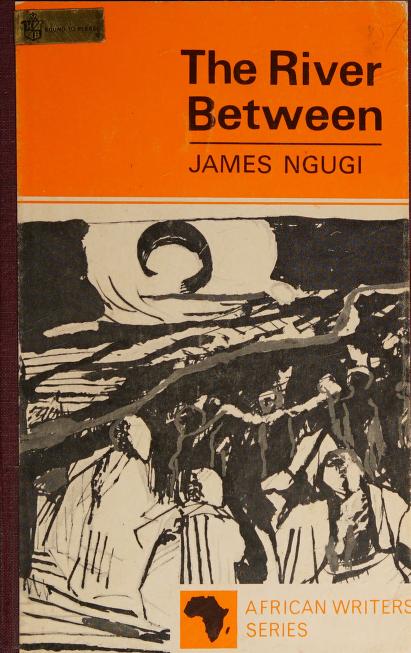
- Title:
- The River Between
- Author:
- Ngũgĩ wa Thiong'o
- Date of Publication:
- 1965
- Description:
- The River Between is a 1965 novel by Kenyan author Ngũgĩ wa Thiong'o that was published as part of the influential Heinemann African Writers Series. It tells the story of the separation of two neighbouring villages of Kenya caused by differences in faith set in the decades of roughly the early 20th century. The bitterness between them caused much hatred between the adults of each side. The story tells about the struggle of a young leader, Waiyaki, to unite the two villages of Kameno and Makuyu through sacrifice and pain. (Source: Wikipedia)
- Keywords:
- Belief Community Critique Ethics Ritual Sacrifice
- Religions:
-
Christianity-Protestant majorAnimist-African major
- Locations:
-
Kenya major
- Wikidata Entity ID:
- https://www.wikidata.org/wiki/Q7760989
- Open Library ID:
- https://openlibrary.org/works/OL5971765M
- Item Type:
- Text
- Item Image Format:
- image/jpeg
Keyword Engagements
- Belief
- In Ngugi wa Thiong’o’s The River Between characters frequently undergo a crisis of faith. Muthoni, the daughter of the Christian preacher Joshua, dies after undergoing female circumcision, a ritual that is shunned by her father but seen as a vital initiation in Gikuyu tribal tradition. Muthoni, who is a fervent Christian, also deeply desires to become a woman in the tribe. After Muthoni’s death, her sister Nyambura struggles with her loyalty to her father and Christianity, on the one hand, and her love and desire for Waiyaki in the Gikuyu tribe, on the other. Her doubt sees her reject Waiyaki’s declaration of love, though she later defies her father for Waiyaki. Waiyaki himself is caught between the two warring traditions, wishing for reconciliation but forced to take sides as he fights for what he believes is best for the tribe.
- Community
- In Ngugi wa Thiong’o’s The River Between, the main character Waiyaki’s desire is for the tribal communities, one Christian, the other traditional, that live on opposing ridges to unite. Christian and traditional communities alike see the other faction as the enemy, either understanding conversion to Christianity as a betrayal or the traditional ways as sinful, barbarous rituals that need to cease for the tribe to flourish by accepting Christianity. Waiyaki, however, sees a different path. He wishes to use the education to unite the people against a common enemy, the European colonialists, instead of having them fight each other. Waiyaki’s desire for new forms of relationship is opposed by the mightiest on both sides: the protectors of the tribal practices, the Kiama group, undermine Waiyaki at every turn and the Christian Joshua, father of Muthoni and of Nyambura refuses to condone Waiyaki and Nyambura’s blossoming relationship.
- Critique
- In The River Between, Ngugi wa Thiong’o uses opposing religious views to critique their practices. When Muthoni dies after a circumcision gone wrong, Makuyu, the Christian part of the ridges, lashes out in anger, forsaking the ritual. Christians viewed as circumcision as a ghastly mutilation particularly Muthoni’s father Joshua, who banishes his daughter once she resolves to go through with the ritual. Yet, uncircumcised, Muthoni herself feels incomplete and alienated from her own cultural heritage. Even as she dies from complications associated with the procedure, she believers herself to have done the right thing by choosing to be circumcised. Meanwhile, in Kameno, those of the tribe who oppose Christianity view the white man’s entry into the hills as an ill omen, and wish to cast him out, restoring the purity of the tribe.
- Ethics
- In Ngugi wa Thiong’o’s The River Between, the faith of the tribe is opposed by Christian faith, which is slowly spreading through the ridges. Thiong’o explores the fraught relationship between two opposing faiths, how the morals and customs of the tribe are undermined by the burgeoning Christian presence in the ridges, and how the conduct of the two factions is shaped by their opposing religious views. The introduction of Christianity into the region disrupts and questions preestablished norms and rituals, amplifying pre-existing tensions between the communities on each ridge, while the perspective of the tribe is used to question Christian practices and a people’s right to impose their beliefs upon others.
- Ritual
- The ritual of circumcision plays a major part in Ngugi wa Thiong’o’s The River Between. It serves both as an initiation into adulthood, but also as a point of contention when the young girl Muthoni dies because of the procedure. The Christian part of the ridges considers the ritual unholy, and wishes to abolish it, while the Gikuyu tribe believe that the ritual is essential in the transition from childhood to adulthood. The novel also explores the use of ritual, both Gikuyu and Christian, in everyday life and at important moments of a person’s life. The Gikuyu ritual of “second birth”, is one such ritual, while attending Church and celebrating Christmas can be viewed as important Christian rituals.
- Sacrifice
- In Ngugi wa Thiong’o’s The River Between, the young boy Waiyaki becomes a scapegoat for the people of Makuyu and Kameno. As the Christian and tribal faiths clash and become violent, the need for a scapegoat increases. Waiyaki is caught in the middle. He is heralded as the saviour of the tribe and yet his own background is hybrid. Although the son of a revere tribal leader in Kameno, Chege, Waiyaki has been schooled – at Chege’s insistence – in the Christian, colonial schools. Waiyaki succeeds his father and attempts to remain loyal to tribal traditions while promoting an education system outside the missionary schools. The hope is to educate in the people of the tribe while avoiding Christian evangelism. This mixed background becomes problematic for the Kiama who claim to speak for the traditions of the tribe. Waiyaki comes to be seen as an outsider. He also falls in love with a Nyambura, a Christian. He is then targeted as a scapegoat by the Kiama, who seek to drive out the white man and Christianity from Kenya. Waiyaki’s conflicting feelings and measured approach to independence from the white man is targeted as a weakness and ultimately becomes his downfall. Waiyaki’s betrayal and fall is depicted in the language and imagery of Christ’s passion.
Attribution
- Citation:
- "The River Between", Mapping Religion in the Global Anglophone Novel (MaRGAN), https://ghjensen.github.io/margan/items/margan037.html
Rights
- Rights:
- Metadata and other content produced by the MaRGAN team for this website is free for teaching and research purposes, provided appropriate credit is given. See https://creativecommons.org/licenses/by/4.0/ for more information.
- Standardized Rights:
- https://creativecommons.org/licenses/by/4.0/