RECORD
Untouchable
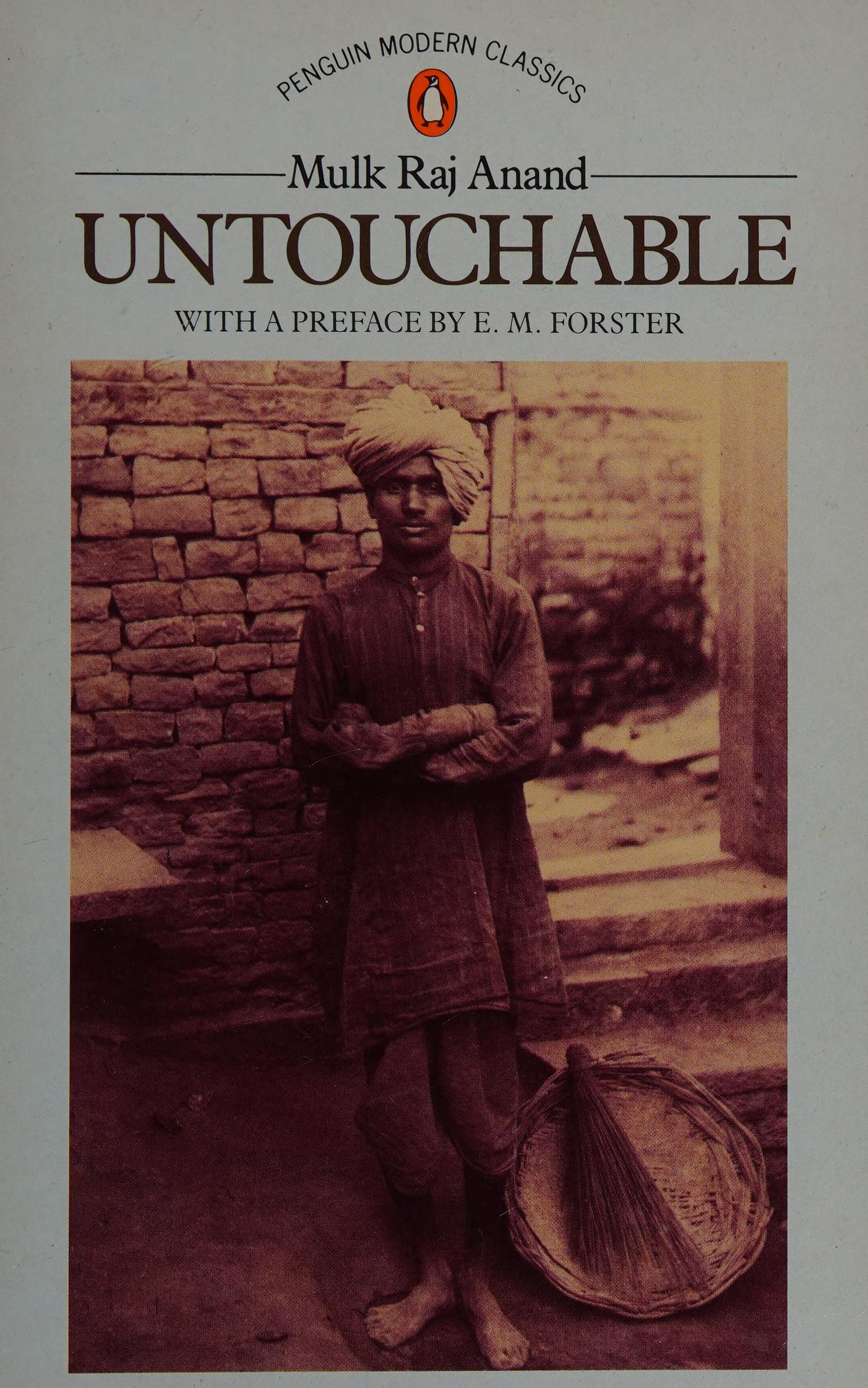
- Title:
- Untouchable
- Author:
- Mulk Raj Anand
- Date of Publication:
- 1935
- Description:
- Untouchable is a novel by Indian writer Mulk Raj Anand published in 1935. The novel established Anand as one of India's leading English authors. The book was inspired by his aunt's experience of being ostracized for sharing a meal with a Muslim woman. The plot of this book, Anand's first, revolves around the argument for eradicating the caste system. It depicts a day in the life of Bakha, a young "sweeper", who is "untouchable" due to his work of cleaning latrines. (Source: Wikipedia)
- Keywords:
- Experience Critique Institutions Ethics Purity
- Religions:
-
Hindu majorChristianity-Protestant minor
- Locations:
-
India major
- Wikidata Entity ID:
- https://www.wikidata.org/wiki/Q3641802
- Open Library ID:
- https://openlibrary.org/works/OL22293680M
- Item Type:
- Text
- Item Image Format:
- image/jpeg
Keyword Engagements
- Experience
- Mulk Raj Anand’s The Untouchable is set in colonial India in the 1930s and follows Bakha, an eighteen-year-old ‘untouchable’, belonging to one of the most oppressed and marginalised communities, to the extent that even their touch is believed to be polluting for upper castes. The novel follows Bakha through a single day of swinging fortunes, one in which he experiences both unexpected kindness and (expected) humiliation and discrimination. These experiences incite anger, resentment, hopelessness as well as timidity in young Bakha. The day culminates with Bakha attending a prayer meeting in which Mahatma Gandhi talks about the unfairness of the treatment meted out to untouchables, and Bakha. Gandi’s words strike Bakha with the force of revelation and effect a conversion to Gandhian politics. This political-religious conversion is contrasted with the distraught Bakha’s earlier meeting with a Christian missionary who attempts to make a convert out of Bakha; the novel incorporates words of hymns and prayers from the missionary; Bakha does not fully comprehend the words and moves on, through their appearance on the page the reader register how the words fail to engage with or are worlds away from the problems Bahka faces. They do not, for instance, speak to the transformation the new technology of flush toilets might instigate. Such considerations are, however, raised in Gandhi’s rally with which the novel closes.
- Critique
- Mulk Raj Anand’s The Untouchable critiques the caste system and its inequities. It depicts a day-in-the-life of Bakha, a young ‘untouchable’ who lives with his family in the ‘outcastes colony’- a dirty and dingy place that is outside the city limits of Bulashah in colonial India. Through the course of his day, we see the various ways in which Bakha is unjustly treated and humiliated, from being beaten for bumping into an upper-caste man, to his not being allowed to enter a temple, and the humiliating way in which he is forced to clean a drain for his food. The novel is unflinching in its depiction of the self-serving and hypocritical Hindu priests who uphold the caste system. Early in the novel, Anand contrasts the physical prowess, focus, and productivity of Bakha (even amidst his undignified labour of cleaning communal latrines) with a Hindu priest, concerned with the delicacies he is to be offered to eat and his own bowel movements. Later, too, we have of Bakha is denied entry to a temple for reasons of caste as he attempts to confront the priest who has sexually assaulted his sister.
- Institutions
- Mulk Raj Anand’s The Untouchable depicts the intricacies of caste system in graphic detail. Through the realist mode of the novel and the focalisation of the narrative through the character of Bakha, the novel shows how this system of graded inequalities operated. Not only are the ‘untouchables’ or ‘outcastes’ considered outside the pale of orthodox Hindu society, but they also literally live outside town, and are excluded from every aspect of public life, such as not being allowed into the temple, not being allowed to eat and drink out of the same vessels as the ‘upper’ castes and even their touch being considered as polluting. This system is upheld by priests. Early in the novel, a Hindu priest refuses to assist a lower caste woman collecting water for fear of her polluting touch. Later in the novel, a Hindu priest overcomes reservations about touching untouchables and sexually assaults Bakha’s sister. The priest then uses the prohibition on outcastes entering the temple to shield him from Bakha’s anger.
- Ethics
- Mulk Raj Anand’s The Untouchable revolves around Bakha, who is the eponymous untouchable- the lowest tier of the Hindu caste system. Through the realist mode of the novel and the focalisation of the narrative through the character of Bakha, the novel shows how this system of graded inequalities operated. Caste as a construct is given legitimacy by orthodox religion and is enforced by public pressure; with regard to the former Anand contrasts the physical prowess, focus, and productivity of Bakha (even amidst his undignified labour of cleaning communal latrines) with a Hindu priest, concerned only with the delicacies he is to be offered to eat and his own bowel movements. This priest refuses to help refuses to assist a lower caste woman collecting water for fear of her polluting touch. The religiously sanctioned system enforces a hierarchy amongst human beings that guides all aspects of interaction between them, from the simplest aspects such as physical contact, to activities such as eating and sharing of food. The novel ends with Bakha attending a political rally hosted by Mahatma Gandhi; Gandhi speaks to Bakha’s situation in a way that no-one else in the novel has. After depicting its inequalities, the novel closes with Bakha’s participation in a political movement that expresses a willingness to redress these inequities.
- Purity
- Mulk Raj Anand’s novel The Untouchable documents through realist narration the injustices and inequities of the caste system. Through the events that befall the protagonist Bakha, the novel demonstrates how caste completely dominates everyday life in colonial India. The caste system is based on ideas, practices and rituals related to purity. As part of the caste system, Bakha’s occupation of being a sweeper is hereditary, and in an era before flush toilets, this (and many other service occupations) was seen as ritually impure. Through the logic of the caste system, this translates into Bakha and others like him also being impure. As we are shown in the novel, their touch, or indeed, their very presence (such as in the sacred space of the temple) is seen as impure and polluting to the upper castes. Early in the novel, a Hindu priest refuses to assist a lower caste woman collecting water for fear of her polluting touch. The rigid separation caste boundaries posed and the vigorous often violent ways in which they were enforced – Bakha, for instance, is beaten when he bumps into higher caste man in town while sweeping – keeps the the caste system in place.
Attribution
- Citation:
- "Untouchable", Mapping Religion in the Global Anglophone Novel (MaRGAN), https://ghjensen.github.io/margan/items/margan001.html
Rights
- Rights:
- Metadata and other content produced by the MaRGAN team for this website is free for teaching and research purposes, provided appropriate credit is given. See https://creativecommons.org/licenses/by/4.0/ for more information.
- Standardized Rights:
- https://creativecommons.org/licenses/by/4.0/