RECORD
Bless Me, Ultima
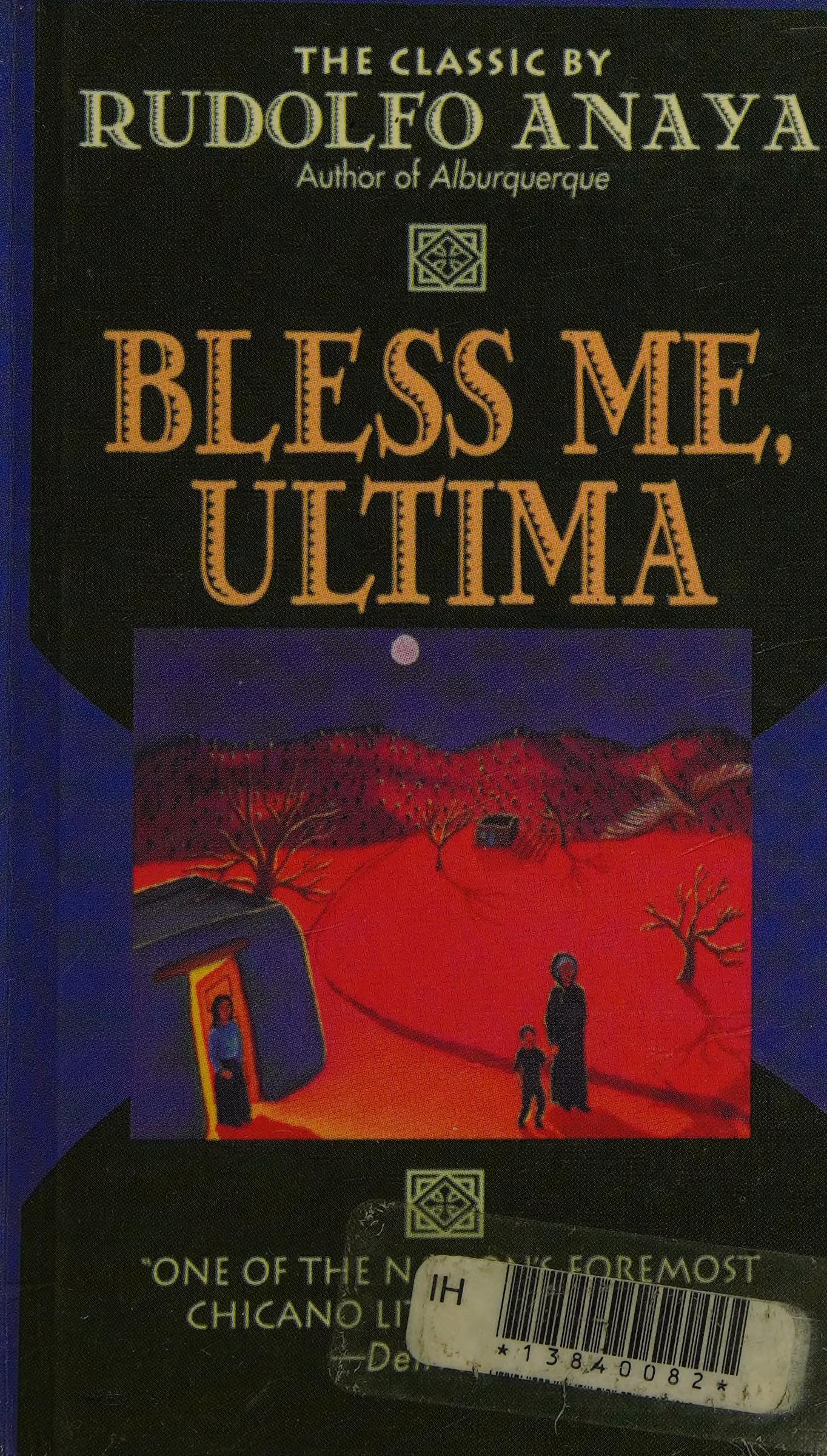
- Title:
- Bless Me, Ultima
- Author:
- Rudolfo Anaya
- Date of Publication:
- 1972
- Description:
- Bless Me, Ultima is a coming-of-age novel by Rudolfo Anaya centering on Antonio Márez y Luna and his mentorship under his curandera and protector, Ultima. It has become the most widely read and critically acclaimed novel in the New Mexican literature canon since its first publication in 1972. Teachers across disciplines in middle schools, high schools and universities have adopted it as a way to implement multicultural literature in their classes. The novel reflects Hispano culture of the 1940s in rural New Mexico. Anaya's use of Spanish, mystical depiction of the New Mexican landscape, use of cultural motifs such as La Llorona, and recounting of curandera folkways such as the gathering of medicinal herbs, gives readers a sense of the influence of indigenous cultural ways that are both authentic and distinct from the mainstream. (Source: Wikipedia)
- Keywords:
- Healing Holy People Place Ritual
- Religions:
-
Animist-Native American major
- Locations:
-
United States major
- Wikidata Entity ID:
- https://www.wikidata.org/wiki/Q4926190
- Open Library ID:
- https://openlibrary.org/works/OL61279021M
- Item Type:
- Text
- Item Image Format:
- image/jpeg
Keyword Engagements
- Healing
- The central figure of Rudolfo Anaya’s novel, Bless Me, Ultima, is Ultima, an older woman who is a curandera, a herbalist and midwife who heals through the use of herbs and ritual magic. The novel has an episodic structure, with the child narrator, Tony, telling of different incidents in his childhood, many involving Ultima. Ultima’s power and wisdom are a thread running through the novel. A central incident involves Ultima healing Tony’s uncle who has been cursed by witches. Ultima attracts the attention of the witches’ father and he threatens her several times, eventually succeeding in killing the owl that holds her spirit and she dies that same night. Ultima shares her knowledge with Tony, teaching him about medicinal plants and how to gather them appropriately and show respect in the way they are harvested by asking the plants to give their medicine.
- Holy People
- Rudolfo Anaya’s novel, Bless Me, Ultima, centres on the figure of Ultima, a family friend who comes to live with the narrator, Tony Marez, and his family when he is a child. Ultima is a curandera, an herbalist, midwife and wise woman who heals through plant wisdom and ritual magic. Ultima is presented as wise and knowledge about the land, particularly plants and also as having access to knowledge beyond ordinary understanding. She is aligned with the owl and an owl appears periodically in the text, said to share Ultima’s spirit. When the owl is killed, Ultima dies soon after.
- Place
- Place is a major theme in Rudolfo Anaya’s novel, Bless Me, Ultima. The story is set in New Mexico and the narrator, Tony, describes three places of spiritual and social significance in the novel: the town of Guadalupe where his family presently lives, with its surrounding farms; the llano, grass plains described as freer, wilder and more pagan than the town; and the river, a place that is similar to the llano in terms of wildness and contact with ancient, pagan (as described by the narrator) religion, the home of the golden carp, described as a pagan god. The town and farms are presented in opposition to the llano, a place of greater freedom and wildness. Tony’s mother and her brothers are from the farm land and Tony’s father and Ultima are from the llano. The town and farms are aligned with Catholicism and the llano and river aligned with Indigenous animist traditions in which the sacred is found within the land, plants and animals. Tony himself is torn between the two places, always looking for contact with the sacred and having strong emotional connections with both sides of his family. He eventually determines to unite the spirituality of both farm (Catholicism) and llano (Indigenous tradition).
- Ritual
- Ritual plays a significant role in Rudolfo Anaya’s novel, Bless Me, Ultima, firstly, in the various healing or protection rituals, involving herbs, invocations, bathing, etc performed by Ultima. The second major ritual of the novel is first communion for Tony and his classmates. The children take catechism lessons during the months leading up to Easter in order to learn Catholic doctrine and practice. They then participate in a catechism test by the bishop, a first confession and communion. The contents of the lessons and anxiety about sin, particularly sex, becomes a topic of teasing and conflict amongst the children. Tony is pushed to pretend to be a priest and hear confessions, which makes him uncomfortable. The children turn on Florence, a boy who claims to have no sins but who accuses God of sinning against him because of the death of his parents, and on Tony who refuses to give him penance. Tony is deeply disappointed by communion because he expected to feel the presence of God and he does not.
Attribution
- Citation:
- "Bless Me, Ultima", Mapping Religion in the Global Anglophone Novel (MaRGAN), https://ghjensen.github.io/margan/items/margan003.html
Rights
- Rights:
- Metadata and other content produced by the MaRGAN team for this website is free for teaching and research purposes, provided appropriate credit is given. See https://creativecommons.org/licenses/by/4.0/ for more information.
- Standardized Rights:
- https://creativecommons.org/licenses/by/4.0/