RECORD
A Glastonbury Romance
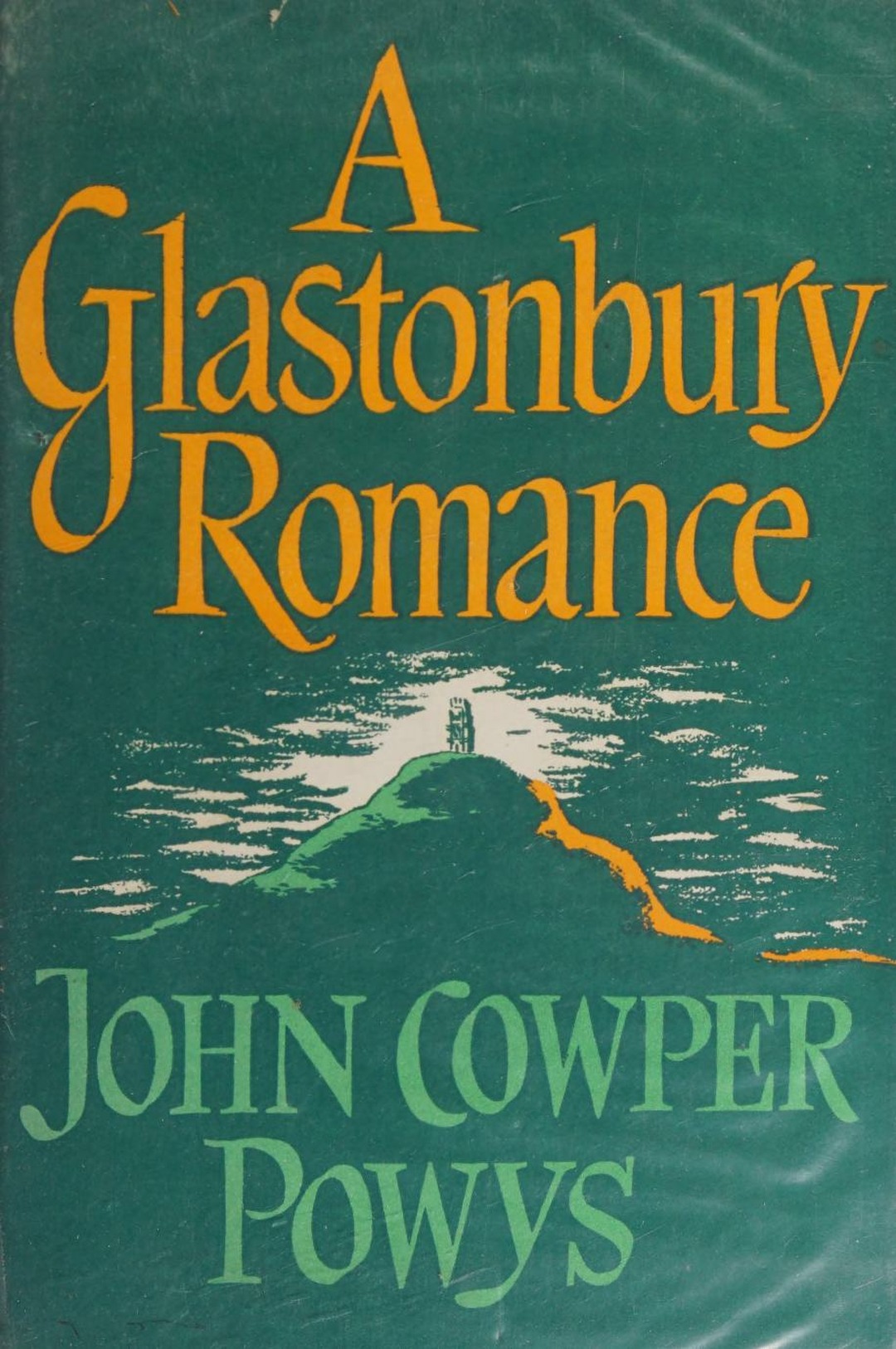
- Title:
- A Glastonbury Romance
- Author:
- John Cowper Powys
- Date of Publication:
- 1932
- Description:
- A Glastonbury Romance was written by John Cowper Powys (1872–1963) in rural upstate New York and first published by Simon and Schuster in New York City in March 1932. An English edition published by John Lane followed in 1933. It has "nearly half-a-million words" and was described as "probably the longest undivided novel in English". (Source: Wikipedia)
- Keywords:
- Holy People Performance Sexuality Place Sacrifice
- Religions:
-
Christianity-Anglican major
- Locations:
- Wikidata Entity ID:
- https://www.wikidata.org/wiki/Q1529809
- Open Library ID:
- https://openlibrary.org/works/OL47690713M
- Item Type:
- Text
- Item Image Format:
- image/jpeg
Keyword Engagements
- Holy People
- Powys’s A Glastonbury Romance features a rotating cast of holy people. At the forefront of public life in the community is a fanatical lay-preacher, John Geard, who uses an unexpected inheritance to leverage his charismatic hold over the population into political power as mayor of Glastonbury. Geard hatches a plot to turn Glastonbury into the centre of a new syncretic (pagan-Christian) religion with an annual festival, a ‘Glastonbury revival’ with no connection to existing churches. The son of a vicar, Sam Dekker, aspires to the condition of a medieval mystic or a saint practising sensory deprivation and experiencing a series of epiphanies in which he sees first Christ on the cross and then a vision of the Grail cup holding Christ’s blood. Among other holy people in the novel are Sam Dekker’s father, the vicar of Glastonbury, who falls in love with the same man as his son, Owen Evans, a mystic and student of Welsh mythology who plays the role of the crucified Christ in the pageant. Several characters might be read as variations on the holy fool including Bet Chinnock (Mad Bet) who takes a witch-like role and is later identified as a Grail messenger.
- Performance
- Midway through Powys’s A Glastonbury Romance the mayor John Geard stages a Midsummer Glastonbury Pageant as part of his plan to revive Glastonbury as the centre of a new syncretic religion. The Pageant attracts a large crowd of locals as well as travelling performers and tradespeople and an impressive number of audience members from overseas including a pair of monks from a monastery in the Caucasus and a Greek orthodox priest. The Pageant goes ahead in the midst of agitation and protests from striking factory workers symbolic of the conflict between communism and religious and civic authority in the novel. But nothing goes to plan, and a three part programme merging Cymric mythology (specifically a dumbshow showing the coronation of Arthur and Guinevere) with a Passion Play, ends in chaos when Owen Evans, playing the crucified Christ, loses consciousness on the cross.
- Sexuality
- Powys’s Glastonbury Romance suggests a generative tension between religious practices, traditions and taboos and a wide variety of sexual acts, feelings and perversions. The novel depicts many examples and evidence of non-normative and transgressive sexual desires and relations including extramarital sex, same-sex and bisexual relations, incestuous desires, sex work, lechery and illegitimacy. Much of the spiritual content of the novel seems erotic in character and religious activities and imaginaries are often suffused with wild energies suggesting the pagan history and spirit of Glastonbury.
- Place
- The town of Glastonbury in Somerset, England is the setting for Powys’s novel and provides much of its thematic and spiritual significance. Central to English mythology and to Arthurian and Grail legends in particular the town is saturated in cultic and spiritual meaning and tradition. It has, the novel states, ‘a personality of its own.’ It is this history on which the mayor John Geard attempts to draw through his annual festival or ‘Glastonbury revival’. At the same time Powys acknowledges the encroachment of modern industry into rural Somerset and the fictional Glastonbury is the site of a Municipal factory run by Philip Crow who plans further industrial development in the area. Towards the end of the novel the landscape takes on biblical and apocalyptic features as a flood threatens to engulf the town.
- Sacrifice
- The centrepiece of the Midsommer Glastonbury Pageant is a Passion Play featuring a local man, Owen Evans, as the crucified Christ. The preparations and staging of this imitated Crucifixion are heavily ironized and its spiritual meaning undercut by the narrative which, focalized through Evans, registers his secret masochistic satisfaction and growing religious doubts. He eventually loses consciousness and is taken to hospital where he later recovers. Continues from 21 (performance)
Attribution
- Citation:
- "A Glastonbury Romance", Mapping Religion in the Global Anglophone Novel (MaRGAN), https://ghjensen.github.io/margan/items/margan025.html
Rights
- Rights:
- Metadata and other content produced by the MaRGAN team for this website is free for teaching and research purposes, provided appropriate credit is given. See https://creativecommons.org/licenses/by/4.0/ for more information.
- Standardized Rights:
- https://creativecommons.org/licenses/by/4.0/