RECORD
Ceremony
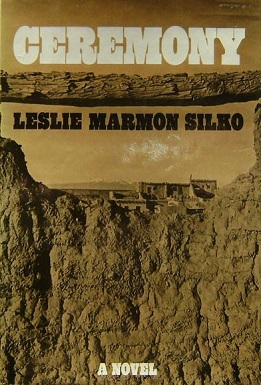
- Title:
- Ceremony
- Author:
- Leslie Marmon Silko
- Date of Publication:
- 1977
- Description:
- Ceremony is a novel by Leslie Marmon Silko, a writer of Laguna Pueblo descent. It was published by Viking Press in 1977. The title Ceremony is based on the oral traditions and ceremonial practices of the Navajo and Pueblo people. The book helped secure Silko a MacArthur “genius” grant in 1981. (Source: Wikipedia)
- Keywords:
- Place Ritual Psyche Healing Holy People
- Religions:
-
Animist-Native American major
- Locations:
-
United States major
- Wikidata Entity ID:
- https://www.wikidata.org/wiki/Q5064165
- Open Library ID:
- https://openlibrary.org/works/OL2538273M
- Item Type:
- Text
- Item Image Format:
- image/jpeg
Keyword Engagements
- Place
- Stars, mountains, rivers, rain and plants are significant in Leslie Marmon Silko’s novel Ceremony. The novel is set in the American southwest, in and around the Laguna Pueblo reservation (it includes other locations, such as flashbacks to Tayo’s wartime experiences in the Pacific). Through the parallel stories in the poetic and prose segments of the novel (several of the poems are dedicated to Hummingbird and Fly’s quest to end a drought caused by offense to Corn Woman) and many of Tayo’s encounters with land, animals and people, Silko makes it clear that the health of the people is entwined with the health of the land. Drought, trauma, and community and environmental degradation are portrayed as interconnected across the novel. Healing, ceremony and personal strength are deeply connected to the land, as the medicine man Betonie explains, ‘it is the people who belong to the mountain’ (p. 128).
- Ritual
- The importance of ritual to Leslie Marmon Silko’s novel, Ceremony, is indicated in the title. Ritual, and the interplay of ceremony and story, structure the novel as a whole while also appearing within it. The novel opens and closes with a poem and poetic sequences are included across the text, with the majority of the text in prose. The poems weave through the text, drawing the readers attention to poetic storytelling as a form of sacred ceremony. The novel draws on sacred Laguna Pueblo traditions. It opens with a poem in which Thought-Woman, the spider, creates through thinking and the narrator declares, ‘I’m telling you the story / she is thinking’ (1). Details of many ceremonies, both past and present, are included in the novel, while other ceremonies and stories are alluded to without detail. The novel includes discussion of spiritual powers, both of destruction (witchery) and of creation, healing and flourishing. The aim of the novel’s ceremony is healing. The ceremony holds many elements including storytelling and traveling. A story told in poetic sections across the novel involves Fly and Hummingbird’s quest to resolve the drought that has followed disrespect to Corn Woman. Their story intersects with Tayo’s during Tayo’s ceremony with the medicine man, Betonie. Tayo finally begins to recognize patterns in the world around him, reconnects with his traditions and realizes how easily he might slip into escalating cycles of violence. The novel closes with a final invocation: ‘Sunrise, accept this offering, sunrise’ (262). See also healing.
- Psyche
- The protagonist of Leslie Marmon Silko’s novel, Ceremony, Tayo has postwar wounds which are mental, rather than physical. He suffers flashbacks and deep distress after his experiences in the Pacific in World War II, with particularly painful memories around the death of his cousin Rocky. Rocky is an ongoing presence in the novel and coming to terms with his death is part of Tayo’s healing journey. Tayo spends time in a psychiatric hospital in Los Angeles abut his family believe this is unhelpful to him and determine to send him to a traditional healer instead. See also healing
- Healing
- The primary aim of the ceremony at the heart of Leslie Marmon Silko’s novel, Ceremony, is the healing of Tayo’s adverse mental health following the Second World War. It is evident from the descriptions in the novel that Tayo suffers some kind of PTSD, exacerbated by alcohol abuse and violent encounters with other traumatised veterans. While Tayo seeks healing across the text, the resolution of a drought is also sought. The interconnection between Tayo’s healing and healing the land is emphasized across the novel. The elders in Tayo’s Laguna Pueblo community explain to Tayo that his healing is required not only for his own sake but for his community and for the whole world, which is fragile, holding both the strength and fragility of a spider’s web. The medicine man, Betonie, derives a specific ceremony for Tayo’s health, while emphasizing both that the rituals need to adapt following the disruption of white colonialism and also that Tayo’s healing is part of a larger story. See also ritual and psyche.
- Holy People
- Leslie Marmon Silko’s novel, Ceremony, includes many holy people. The elders (Grandma, Ku’osh and Betonie) in the protagonist, Tayo’s, community are holy in their wisdom and knowledge of Laguna Pueblo traditions. Betonie is a medicine man who guides Tayo’s healing ceremony. Betonie is sometimes distrusted because he changes the traditional rituals, claiming that they need to grow and respond to the changes caused by colonisation. Much of Betonie’s power is derived from his belonging to the land. See also ritual.
Attribution
- Citation:
- "Ceremony", Mapping Religion in the Global Anglophone Novel (MaRGAN), https://ghjensen.github.io/margan/items/margan032.html
Rights
- Rights:
- Metadata and other content produced by the MaRGAN team for this website is free for teaching and research purposes, provided appropriate credit is given. See https://creativecommons.org/licenses/by/4.0/ for more information.
- Standardized Rights:
- https://creativecommons.org/licenses/by/4.0/