RECORD
Lolly Willowes
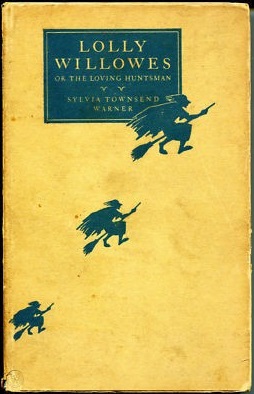
- Title:
- Lolly Willowes
- Author:
- Sylvia Townsend Warner
- Date of Publication:
- 1926
- Description:
- Lolly Willowes; or The Loving Huntsman is a novel by English writer Sylvia Townsend Warner, her first, published in 1926. It has been described as an early feminist classic. It is a satirical social novel with fantastic elements, set in England at the beginning of the 20th century. It deals with the social restrictions on women as well as alternative ways of living during the interwar period. (Source: Wikipedia)
- Keywords:
- Gods & Spirits Holy People Institutions Place Sexuality
- Religions:
- Locations:
- Wikidata Entity ID:
- https://www.wikidata.org/wiki/Q6668990
- Open Library ID:
- https://openlibrary.org/works/OL58929620M
- Item Type:
- Text
- Item Image Format:
- image/jpeg
Keyword Engagements
- Gods & Spirits
- Sylvia Townsend Warner’s Lolly Willowes features a middle-aged woman who is transformed into a witch. The first concrete suggestion of the devil’s presence is the mysterious appearance of a cat in Lolly’s house. Lolly interprets the cat as the Devil’s Officer or ‘plenipotentiary’ of his power and understands from that moment on that she has sealed a compact with the Devil. She later seems to meet the Devil himself at a witches Sabbath where he is masked, feminine and horrifies her by licking her face. Lolly retreats to the woods where she then meets the ‘real Satan’ in the form of a gamekeeper come to offer her reassurance and protection. She asks him to get rid of her nephew Titus who has become a permanent visitor to Great Mop and the cat/Satan enact a series of punishments on Titus, curdling his milk, persecuting him with flies and finally chasing him out of the village. At the end of the novel Lolly accompanies Satan to Mulgrave Folly built by a dissolute nobleman and misguided devil worshipper. There she gives a long speech on her understanding of witches and seems to assent to his ‘indifferent ownership’ of her.
- Holy People
- The first two sections of Lolly Willows unfold in the style of a Victorian domestic realist novel and/or a novel of development. They describe the death of Everard Willowes and the reluctant transfer of his daughter, Laura Willowes or Aunt Lolly from her childhood home to her brother’s household in London. Following the First World War Lolly decides to move to a rural village Great Mop and there she is unexpectedly transformed into a witch. The transformation is announced in a legalistic sentence describing a compact with the devil undertaken in England in the year 1922. However the change is also anticipated by her early reading in witchcraft literature and the arrival of a cat who would seem to have magical powers. Lolly later attends a witches Sabbath with her landlady who is also revealed to be a witch together with many other of the inhabitants of Great Mop. Lolly encounters the Devil or ‘Loving Huntsman’ of the novel’s title at the Sabbath and the novel ends with a conversation between the two and Lolly’s acknowledgement of Satan’s ‘indifferent ownership’ of her.
- Institutions
- Sylvia Townsend Warner’s Lolly Willowes has been read as an anarchist critique of civil religion or the role of the Anglican Church and Christian religion in upholding the power of the British State. The first half of the novel reveals how the ordered routine and obeisance demanded by the church props up the existing social and class system and how it feeds into the nationalist and militaristic sentiments seen in the First World War. Lolly attends a witches’ sabbath which seems to offer a very different, perhaps anarchistic, social structure. There is no master of ceremonies and the only rule is ‘do nothing for long’. Critics of the end of the novel suggest that Lolly later enters into a different patriarchal system with the devil as her master but as such he is ‘indifferent’ ‘unjudging’ and ‘undesiring’ which amounts to a freedom from if not quite yet a freedom to.
- Place
- Sylvia Townsend Warner’s Lolly Willowes follows Lolly in her removal from her Somerset childhood home, Lady Place, to her brother’s household in London and then finally to the village of Great Mop, a destination seemingly chosen at random from a Guidebook to the Chilterns. Lolly finds a form of freedom from family responsibility and expectation as well as a ‘vocation’ as a witch in the countryside but the novel otherwise avoids an easy contrast between urban and rural. In London Lolly seeks out weird and gothic corners of the city among the City Churches, graveyards and East End docklands. In the countryside she sometimes seems persecuted by the incursion or involuntary reminders of urban life. These include the passage of a goods train which seems to transport her back to the terrors of Paddington, the arrival of her nephew Titus who seems to Lolly to bring his whole family (and everything they stand for) with him and a witches Sabbath that the asocial Lolly finds no less oppressive that a London ball.
- Sexuality
- Sylvia Townsend Warner’s Lolly Willowes has often been read as a challenge to heteronormative and patriarchal social expectations and structures. As a young woman Lolly shows little interest in marriage and proves indifferent to efforts by family members to find her a suitor in London or in India. As a middle-aged woman she escapes her monotonous domestic routine as companion to her brother’s wife and children and sets up home with a landlady, Mrs Leak, in the village of Great Mop. There she becomes a witch which seems to validate her single status as well as to promise access to a queer company or . She attends a witches Sabbath in which partners and sexes seem to flow freely from one to the other and experiences a moment of queer ecstasy with a young woman Emily. The ending of the novel is ambiguous as Lolly seems to assent to a new patriarchal master, the ‘Loving Huntsman’, Satan. However Satan is also a queer and sometimes androgynous figure frequently associated with the Moon (Venus).
Attribution
- Citation:
- "Lolly Willowes", Mapping Religion in the Global Anglophone Novel (MaRGAN), https://ghjensen.github.io/margan/items/margan040.html
Rights
- Rights:
- Metadata and other content produced by the MaRGAN team for this website is free for teaching and research purposes, provided appropriate credit is given. See https://creativecommons.org/licenses/by/4.0/ for more information.
- Standardized Rights:
- https://creativecommons.org/licenses/by/4.0/