RECORD
The Obeah Man
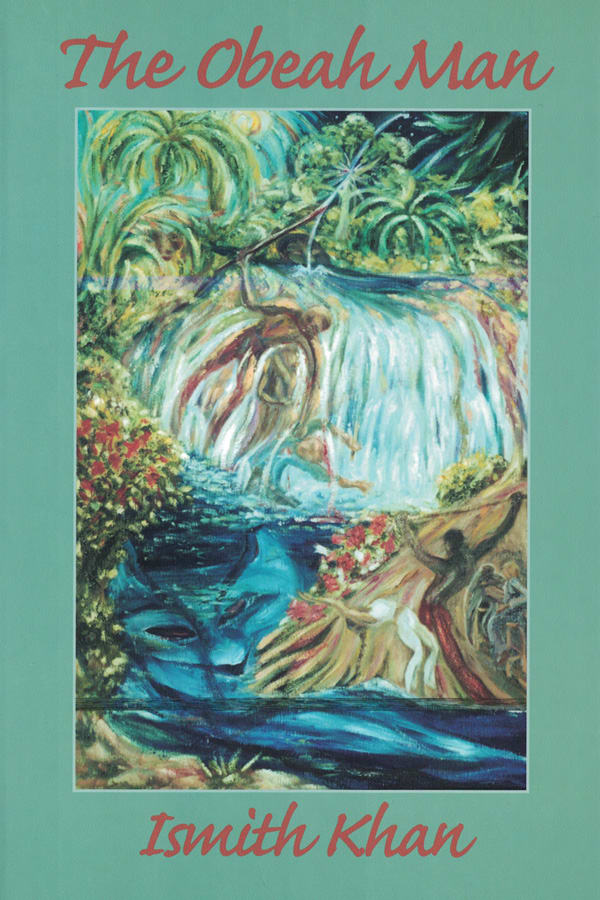
- Title:
- The Obeah Man
- Author:
- Ismith Khan
- Date of Publication:
- 1964
- Keywords:
- Belief Body Healing Holy People Ritual
- Religions:
-
Animist-African major
- Locations:
-
Trinidad and Tobago major
- Wikidata Entity ID:
- https://www.wikidata.org/wiki/Q140310166
- Open Library ID:
- https://openlibrary.org/works/OL5939054M
- Item Type:
- Text
- Item Image Format:
- image/jpeg
Keyword Engagements
- Belief
- In Ismith Kahn’s The Obeah Man, Zampi – the obeah practitioner who is the novel’s protagonist – distrusts his skills and rues his decision to become an obeah man. He distrusts how he was selected for his apprenticeship; he met the previous incumbent of his role at the local bar and worries he may have been the wrong candidate. Zampi also fears that his obeah is ineffective, and that he does not have the requisite power. He struggles, too, with the sacrifices he must make as an obeah man – he withdraws from the city life in Port of Spain to country life. Rather than the acceptance of specific dogma, belief, in this context, is closer to confidence in one’s status, skill, and decisions, but the agonies Zampi experiences as he considers these issues are framed in the language of interiority that resembles the register of loss-of-faith fiction. In ways quite different to that other genre, Zampi restores his confidence in obeah when he works a successful example of obeah in a public setting, producing through his efforts a wound on the arm of a British visitor to Trinidad. The success not only improves his reputation but also restores his confidence.
- Body
- In Ismith Kahn’s The Obeah Man, the practice of obeah is closely connected to the body. Massahood – the stick fighter – demonstrates his strength by driving a nail through his arm. Zampi, the obeah man and the novel’s protagonist, re-creates Massahood’s wound on the limb of an English visitor. The novel produces physical evidence of its power in the wound on the Englishman, which is seen by patrons of the Scorpion Tail bar. Zampi works obeah on Massahood’s stick, which the stick man will use in the fight later; the obeah should work to make him physically impervious to attacks. At one point, Massahood in a drunken haze becomes convinced (wrongly, Zampi tells him) that Zampi had frozen his arm – the arm upon which his fame as a fighter rests – using obeah. Zampi’s successful working of obeah on the Englishman also sets in train events that lead to Massahood’s death. Discussion about obeah is characterised by the physical evidence of its success on human bodies; characters ask not what others believe about obeah, but what it does and whether it works.
- Healing
- In Ismith Kahn’s The Obeah Man, a disabled character known as Hop-and-Drop has sought healing from Zampi, the protagonist and the obeah man of the title. Obeah is a religion of the body. Zampi works obeah on bodies to produce physical effects. Zampi nevertheless fails to heal the legs of Hop-and-Drop. While this attempted healing is recounted through flashback, it impacts upon the two days in which the novel takes place. Frustrated by Zampi’s failure, Hop-and-Drop spreads rumours about Zampi’s former lover, Zelda, and about Zampi himself that exacerbate Zampi’s crisis of confidence in his profession. The novel’s invocation of healing brings with it a dark alternative: the consequences of a failure to heal and the frustration this creates. The novel reports several incidents of obeah being worked for harm: Massahood, for instance, believes Zampi has frozen his arm, Zampi also – at the request – of an English visitor produces a wound on the Englishman’s arm, the obeah worked on the Englishman also sets in train a series of events that result in Massahood’s death.
- Holy People
- Ismith Kahn’s The Obeah Man depicts the life of an obeah man, Zampi. We learn how one becomes an obeah man through apprenticeship to an aging practitioner; ultimately, the trainee takes over the practice of his tutor after the tutor dies or is incapacitated. The novel depicts the unusual way in which Zampi embarked upon this apprenticeship following a meeting with his teacher in the Britannia bar and followed by some fortuitous signs. We learn that obeah men must live in a remote location – Zampi’s house is at a the top of a waterfall – and help all those who journey to his house: tourists and old associates alike. The novel also details how obeah is practised: to make Massahood impervious to attack during his stick fight, we watch Zampi grind up toadstools and other ingredients to make a paste while chanting over it and then applying this paste to the stick. We watch Zampi deny casual requests for aid; those requiring help must seek him out at home. We also see Zampi work a wound upon an English visitor to Trinidad as proof of the power of his obeah. Zampi is also challenged by a lack of confidence: the sacrifice required to live as an obeah is too great, the success of the obeah worked too uncertain to justify his decision to practice. Zampi’s confidence is restored when he publicly demonstrates the power of his obeah on the arm of the Englishman.
- Ritual
- The narrative of Ismith Kahn’s The Obeah Man is shaped by a ritual context. The novel’s action takes place on the two days of carnival. The novel registers how carnival disrupts the social order. Against the backdrop of carnival, Zampi, the protagonist and the obeah man of the title, worries about his profession: he feels alienated by the behaviour of city dwellers during carnival in ways that further his crisis of confidence. He is at home in neither the country where he practises obeah nor the city where he used to live. The physical prowess and violence of the stick fighter Massahood, along with his sexual potency, rise to epic or even monstrous levels during carnival, and Zelda – Zampi’s former lover – is overtly sexual in ways that pose a challenge for Zampi; he is unable to embrace the celibate withdrawn life of the obeah man, and he seeks out Zelda. The disabled character Hop-and-Drop kills Massahood to defend Zelda – with whom he is infatuated –from sexual assault. The novel also depicts several exchanges between the central cast of characters and nameless costumed figures, including a phantasmagorical, violent exchange in the Scorpion Tail bar with a costumed dragon.
Attribution
- Citation:
- "The Obeah Man", Mapping Religion in the Global Anglophone Novel (MaRGAN), https://ghjensen.github.io/margan/items/margan043.html
Rights
- Rights:
- Metadata and other content produced by the MaRGAN team for this website is free for teaching and research purposes, provided appropriate credit is given. See https://creativecommons.org/licenses/by/4.0/ for more information.
- Standardized Rights:
- https://creativecommons.org/licenses/by/4.0/